Gleam
Year 1 (2025-26)
by Elizabeth Skinner
The future of clean.
About This Idea
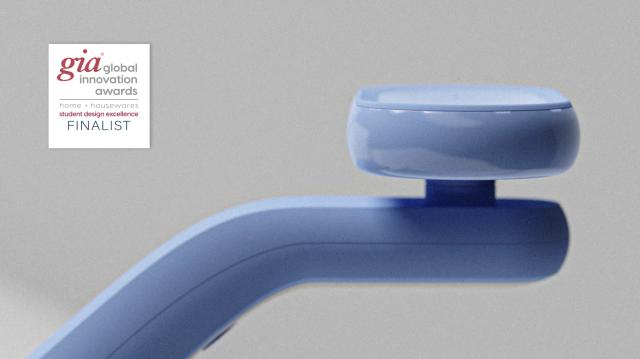
Gleam is a cordless handheld steam cleaner designed to make powerful, chemical-free sanitizing faster and more convenient for everyday cleaning. Superheated steam is highly effective at disinfecting surfaces because temperatures above ~212°F can quickly break down bacteria, viruses, grease, and grime without the need for chemical cleaners. However, most consumer steam cleaners are bulky, slow to heat, and inconvenient to use for small cleaning tasks.
Gleam addresses this by splitting the heating system into two stages. A primary heating coil in the charging dock preheats the water while the device is stored, keeping it near steam temperature and ready for use. A secondary heating coil inside the handheld unit then boosts the water to full superheated steam during use. Because the dock performs much of the heating work ahead of time, the handheld unit requires less power and can operate with a smaller battery pack, making the device lighter, more ergonomic, and fully cordless.
This system allows Gleam to deliver near-instant steam when the user grabs the device, making steam cleaning practical for quick everyday tasks like sanitizing countertops, bathroom fixtures, grout, and small messes. By combining rapid heat-up with cordless convenience, Gleam removes the friction that currently prevents many people from using steam as a regular cleaning method.
Where Did This Idea Spark at WMU?
The idea for Gleam, a handheld steam cleaner, began during my junior year Industrial Design studio at Western Michigan University. Our class was tasked with developing a product concept for the Inspired Home + Housewares Show. I explored everyday cleaning frustrations and found that many people want the sanitizing power of steam without the bulk, complexity, or storage footprint of existing steam cleaners.
As someone with a fine arts and product design background, I was interested in how form, ergonomics, and simplicity could make a traditionally utilitarian product more approachable. Gleam was designed to be compact, intuitive, and easy to grab for quick cleaning tasks, bridging the gap between disposable cleaning products and large floor steamers.
Impact in Kalamazoo
If Gleam succeeds, multiple parts of the Kalamazoo ecosystem benefit. Product development work could be contracted locally through design consultancies such as Tekna or Argenta Park, supporting skilled design and engineering jobs in the area.
The project also showcases the strength of the WMU RIDI design program and highlights Kalamazoo as a place where student ideas can evolve into real products. Long term, local partnerships for prototyping, testing, and potentially small batch manufacturing could keep more of the economic activity tied to the region rather than outsourcing early development elsewhere.
How Investment Helps
This funding would allow the project to move from a concept and appearance model into working functional prototypes. Steam appliances require careful engineering and safety testing, so early investment is critical to validate the product before pursuing manufacturing partners.
The first milestone would be developing and testing a functional prototype locally with the help of a design or engineering consultant. Achieving a safe, working prototype would open the door to user testing, refinement, and discussions with potential manufacturing or licensing partners, all while keeping the early development work centered in Kalamazoo.
What I'll Do With the Money
Functional prototype development. $1,200. Materials, heating components, and fabrication needed to build the first working steam prototype.
Engineering and safety consultation. $800. Work with a local product development consultant to ensure the steam and electrical systems meet safety expectations.
User testing and iteration. $500. Conduct hands on testing to evaluate ergonomics, usability, and cleaning effectiveness.
Prototype refinement. $500. Build a second refined prototype incorporating insights from testing.
About the Founder
My name is Liz Skinner, a senior Industrial Design student at Western Michigan University with a background in fine arts and product design. I focus on creating functional physical products that solve everyday problems through thoughtful design. Gleam represents an opportunity to turn a studio project into a real product while supporting the Kalamazoo design community.